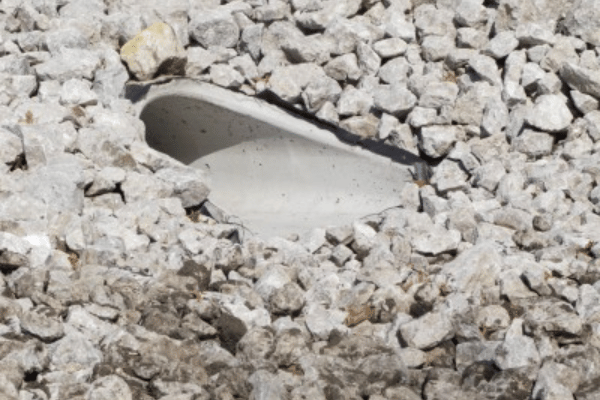
Water should move away from your home, lawn, driveway, and outdoor living spaces – not collect around them. Greenbriar evaluates slope, runoff, soil conditions, and existing drainage patterns to create long-term solutions that protect your property.
Poor drainage can start as a small nuisance and turn into a costly property issue. Standing water weakens turf, creates muddy areas, washes out mulch, exposes roots, damages planting beds, and can send runoff toward foundations, crawl spaces, patios, and driveways.
Greenbriar helps homeowners, commercial property owners, and landowners identify where water enters the property, where it slows down, where it should exit, and how the surrounding landscape can support a cleaner drainage path.
Open each item below to see how the issue typically shows up on a property.
Persistent wet spots often point to low areas, compacted soil, or water that has no clear exit route. We evaluate slope and soil conditions before recommending a correction.
Runoff near structures needs a careful plan. Greenbriar looks at grade, downspouts, hardscape edges, and safe discharge points so water moves away from the places it can cause damage.
Washouts are usually a sign that water is moving too fast or concentrating in the wrong spot. We can redirect runoff, slow it down, and stabilize the finished surface.
Roof runoff can overwhelm planting beds and lawns. Downspout extensions, pipe routing, catch basins, or grading corrections can move that water to a better outlet.
Once erosion starts, storms can deepen the path quickly. We correct the water path and stabilize the affected area with grading, stone, plantings, or erosion-control materials.
Soft ground can make a property harder to use and maintain. A drainage plan can make the area firmer, cleaner, and easier to care for.
Drainage affects walls, patios, walkways, beds, and outdoor living areas. We plan the correction so the finished work protects the landscape and still looks intentional.
Schedule a site assessment and Greenbriar will trace the water path before recommending a fix.
No two drainage problems are exactly alike. A soggy side yard may need a different solution than a washed-out slope, a gutter runoff issue, or a driveway that sends water toward the wrong place.
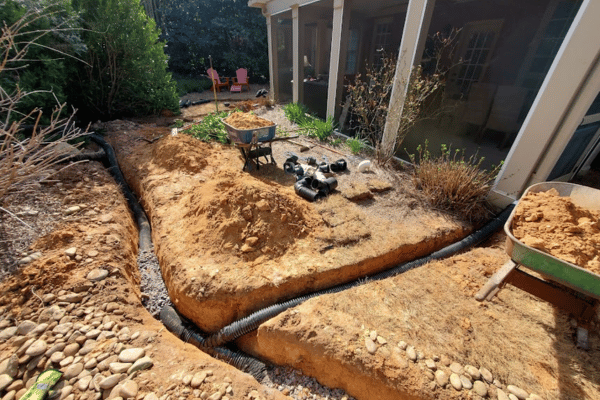
French drains can help water move through wet areas below the surface when the site has a workable outlet and the right soil conditions.
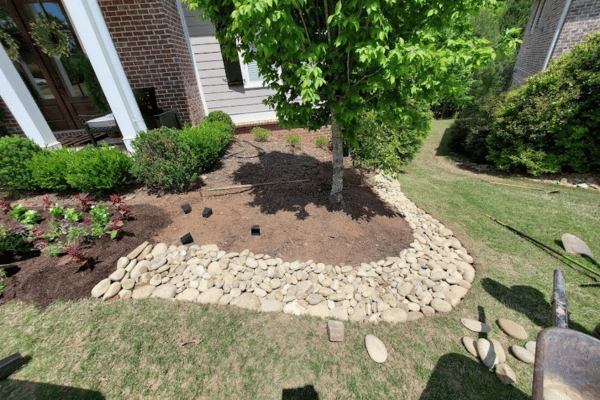
When surface water collects in a low spot, drain boxes and pipe routing can capture runoff and direct it away from sensitive areas.
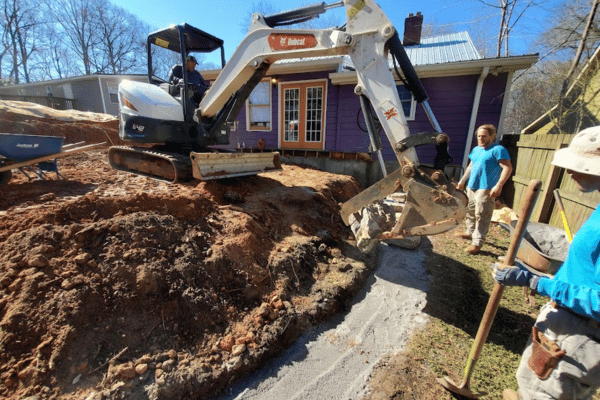
Sometimes the best drainage solution starts with reshaping the land. Greenbriar can pair drainage work with grading and leveling so water has a natural path.
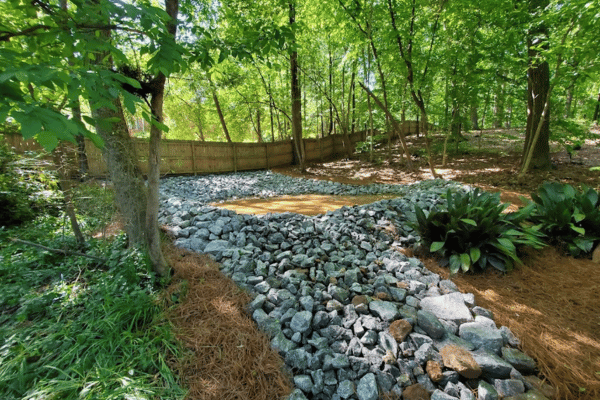
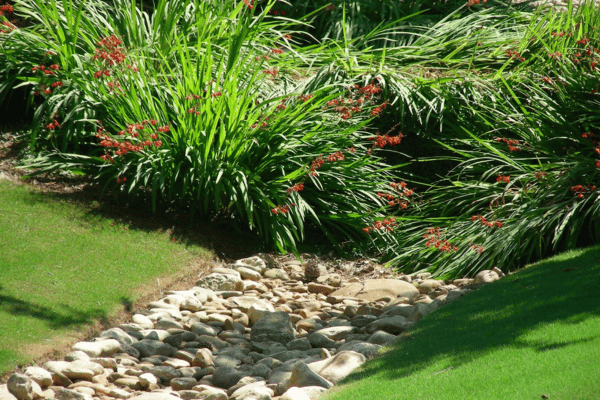
Visible drainage features can be built to look intentional, using stone, creek-style channels, or gravel areas that manage runoff while fitting the landscape.
Erosion is often a sign that water is moving too quickly or in the wrong direction. Greenbriar addresses erosion by slowing water down, redirecting it, and stabilizing the affected area.
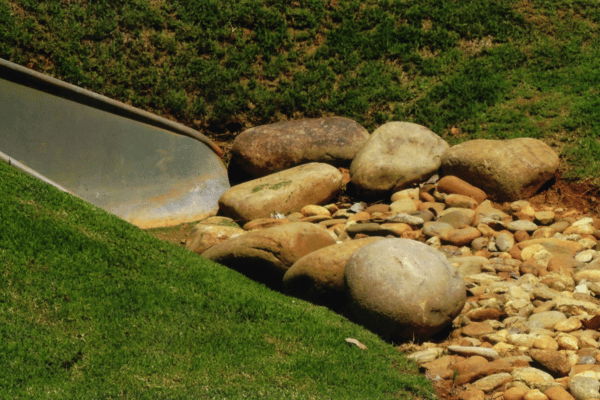
Stone channels, surface shaping, and planting strategy can reduce the speed and force of runoff.
Groundcover, mulch stabilization, erosion-control fabric, and strategic plantings help protect the finished area after grading or drainage work.
The goal is not only to stop erosion. It is to leave the property cleaner, safer, easier to maintain, and better prepared for future storms.
We inspect the affected areas, nearby structures, hardscapes, slopes, soil conditions, and runoff sources.
We explain the source of the issue and recommend the most practical drainage, grading, or erosion-control approach.
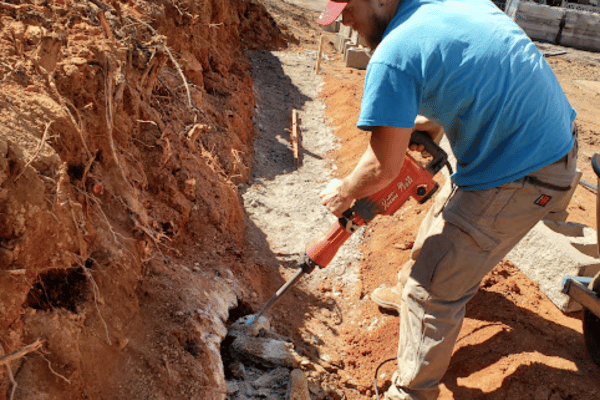
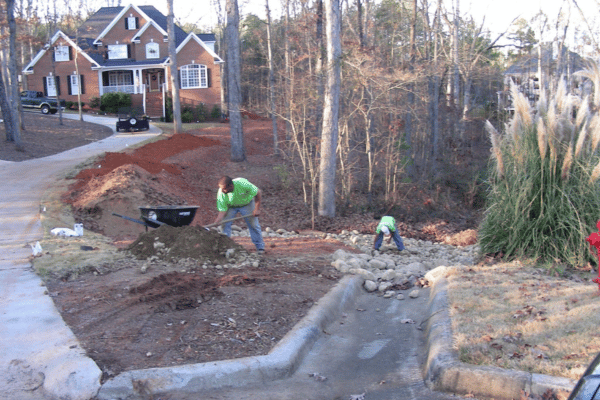
Our team installs the drainage components, adjusts grade where needed, and shapes the area for better water movement.
We finish the surface, stabilize disturbed areas, and review how the system should perform.
Tell us what you are seeing on the property and we will help identify the right next step.
Common signs include standing water, soggy turf, washouts, erosion channels, mulch movement, soft ground, and water collecting near structures or hardscapes.
No. French drains are useful in certain conditions, but some properties need grading, catch basins, downspout routing, swales, or a combination of solutions.
Yes. Drainage and grading are often best handled before sod, planting beds, hardscapes, or other finish work.
Yes. Many erosion problems begin with poor water movement. Redirecting runoff and stabilizing the area can help prevent the problem from growing.
Some drainage features are hidden below the surface. Others use stone, swales, or dry creek-style features to manage water visibly and cleanly.
Contact Greenbriar to schedule a site assessment. We will look at the water issue, discuss your goals, and recommend the right drainage or erosion-control solution.
Greenbriar looks at the full property, not just the wet spot. The result is drainage work that solves the water issue and still fits the finished landscape.
We trace the water source before recommending a fix, so the solution addresses the real drainage pattern rather than only covering the symptom.
French drains, catch basins, swales, grading corrections, stone channels, and erosion controls are selected based on the site conditions and the safest runoff path.
We plan the finished surface so the repair looks intentional, protects the property, and remains manageable after storms.
Greenbriar can evaluate the site and recommend the right next step.